POCA Tribe Guide
What POCA is
POCA is the starter tribe — the first place you build a real, repeatable rhythm in Bingo Shake: conquer stages → complete the tribe puzzle → unlock daily rewards.
POCA is also the lowest tribe, which is exactly why it matters. The card costs are lower, so you can learn your routine without burning through credits fast. Players who skip the “foundation” usually get stuck later because higher tribes feel more expensive when you don’t have consistency yet.
Important note: Credits are an in-game currency used inside Bingo Shake and have no cash value.
Once you fully conquer POCA, you unlock a simple but powerful reward:
✅ POCA Daily Tribute: 50 credits per day (collectible after full conquest)
How POCA helps you collect credits daily (in-game)
POCA improves your daily credits flow in two ways:
1) It helps you stop wasting credits
Before players progress smoothly, they usually lose credits in avoidable ways—forcing hard stages when they’re not stable yet, rushing retries, or playing on tilt. POCA is designed to teach you control early, while the cost is still forgiving.
2) It unlocks your daily tribute (50/day)
When POCA is fully conquered, your daily loop becomes simple: collect your tribute (when available), start with a stage you can clear reliably, then push progress in short bursts. POCA is where the game starts feeling less random and more routine-based.
POCA conquest overview (how the puzzle system works)
POCA conquest is about stages and puzzle progress.
- Stages are your difficulty checkpoints.
- As you conquer stages, you progress the POCA tribe puzzle.
- When the POCA puzzle is completed and POCA is fully conquered, you unlock the 50 credits/day daily tribute.
Tip for your page layout: You can place the image for each village directly under each Stage heading.
POCA stages (villages), puzzle pieces, and completion rewards
Below are the 10 POCA stages with their village names, puzzle pieces, and one-time completion rewards.
Stage 1 — Sprout Village
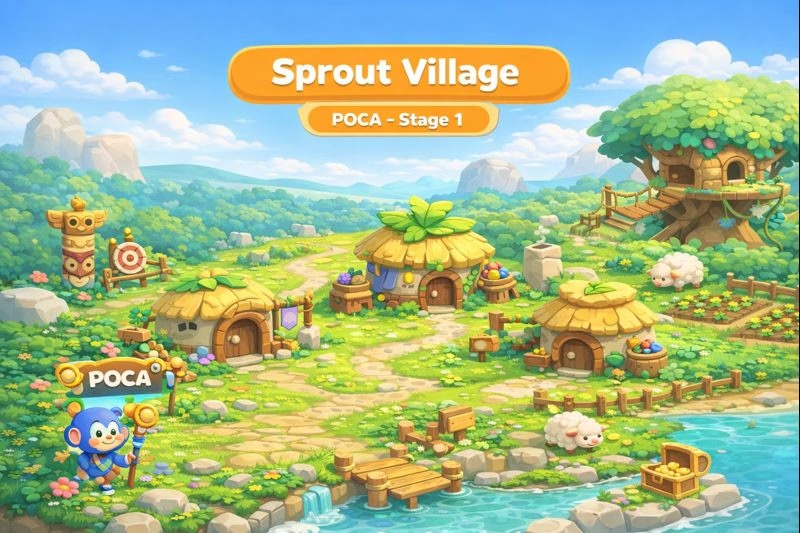
Sprout Village is the first safe pocket of POCA — a cheerful little settlement where everything feels doable again. This is where players learn the flow without pressure and start building confidence with clean clears instead of desperate retries.
Puzzle pieces in this stage: 6 pieces
Stage completion reward (one-time): +100 credits
Stage 2 — Pebble Crossing
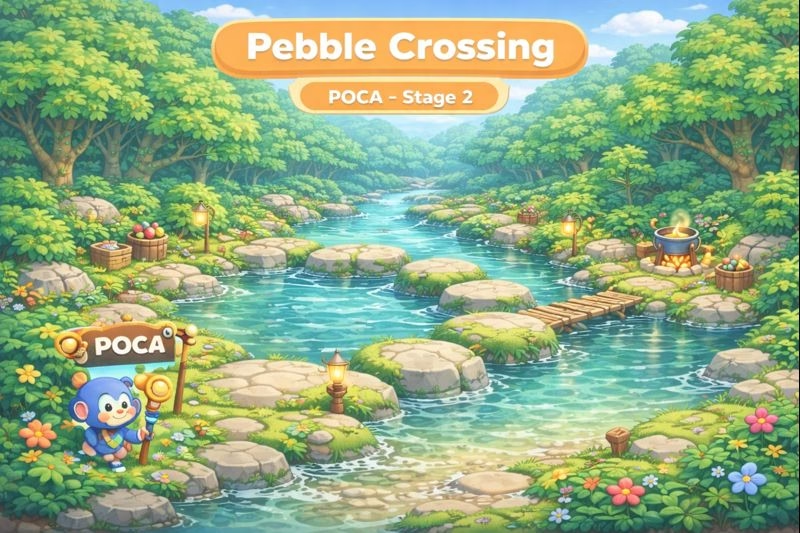
Pebble Crossing is the tribe’s “real entrance.” It looks calm, but it’s where players start getting tested on consistency — the game quietly checks if you’re clearing on skill or just getting lucky.
Puzzle pieces in this stage: 7 pieces
Stage completion reward (one-time): +110 credits
Stage 3 — Mossy Steps
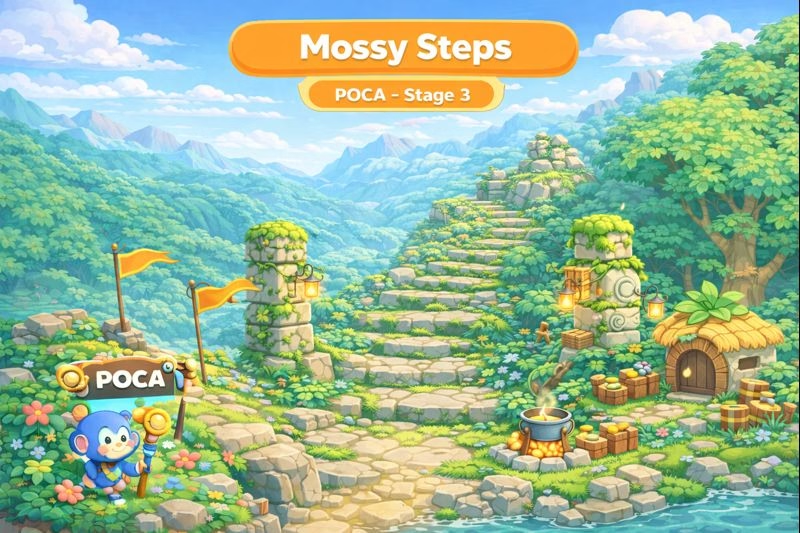
Mossy Steps is where patterns start repeating — and the tribe expects you to notice. This stage is about slowing down, reading the board first, and proving you can win without rushing your moves.
Puzzle pieces in this stage: 8 pieces
Stage completion reward (one-time): +120 credits
Stage 4 — Windridge Path
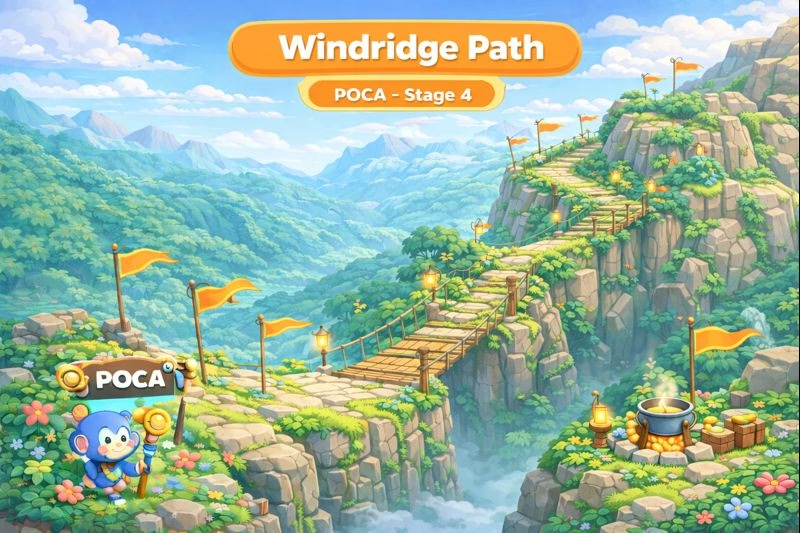
Windridge Path is beautiful, but it punishes autopilot. This is the first point in POCA where mistakes start feeling expensive, so the best players treat it like a “focus check,” not a grind.
Puzzle pieces in this stage: 9 pieces
Stage completion reward (one-time): +130 credits
Stage 5 — Pebble Market
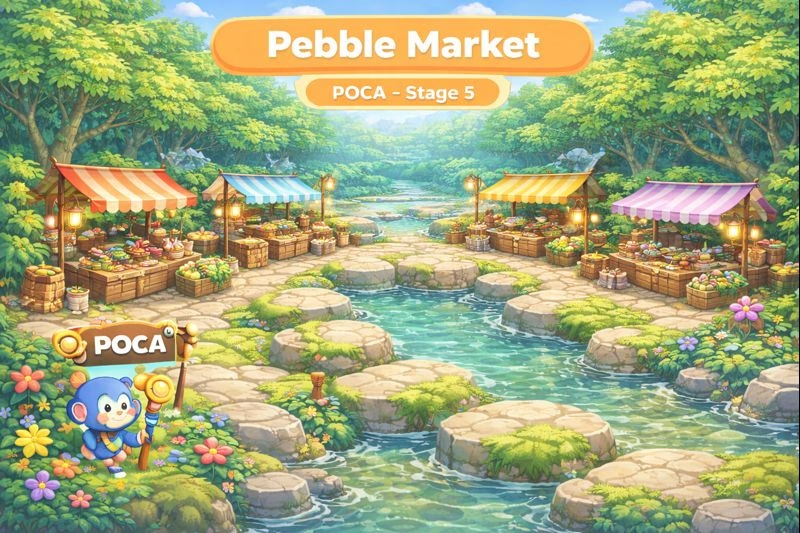
Pebble Market is the “balance test” village — where your routine starts to matter. Players who arrive here broke usually get stuck; players who arrive here stable can climb safely.
Puzzle pieces in this stage: 10 pieces
Stage completion reward (one-time): +140 credits
Stage 6 — Lantern Creek
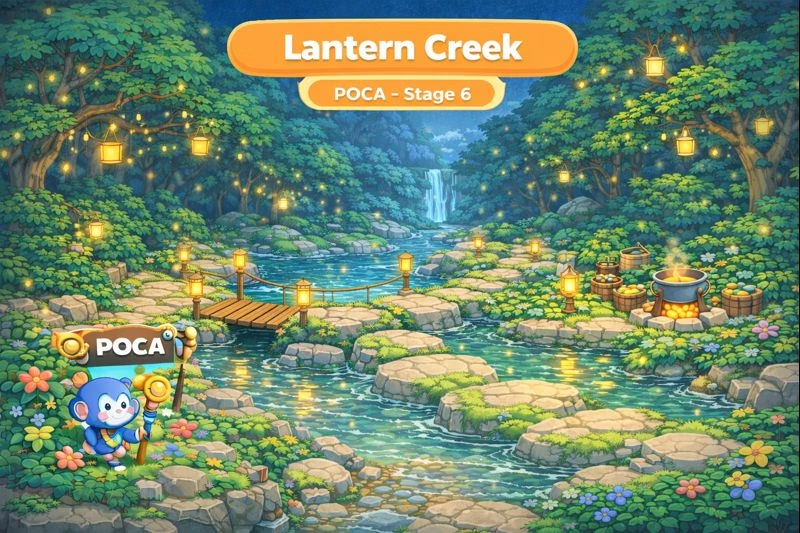
Lantern Creek is where efficiency becomes the whole game. You can still win here, but wasting moves starts to cost you, so this village trains discipline — same approach, cleaner execution.
Puzzle pieces in this stage: 11 pieces
Stage completion reward (one-time): +150 credits
Stage 7 — Totem Meadow
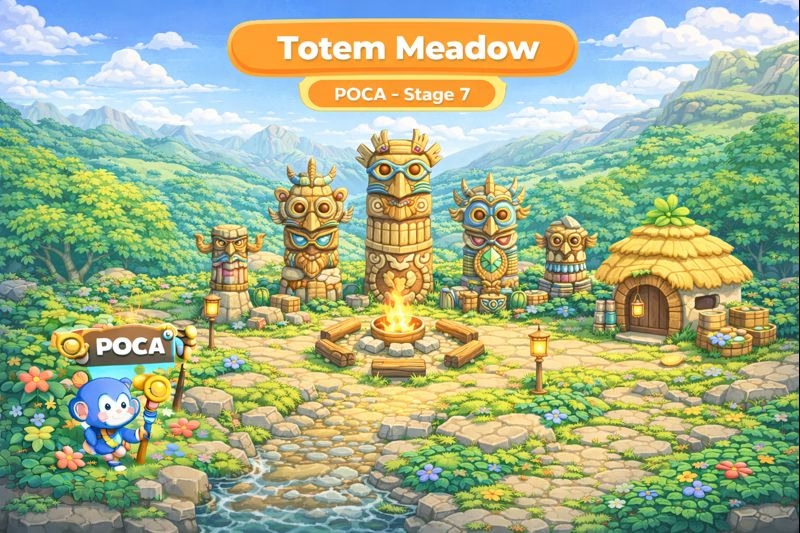
Totem Meadow is the stamina village. It’s not always “hard,” but it drains impatient players. The tribe wants proof that you can clear in bursts, stop when you’re tilted, and come back steady.
Puzzle pieces in this stage: 12 pieces
Stage completion reward (one-time): +160 credits
Stage 8 — Windmill Ridge
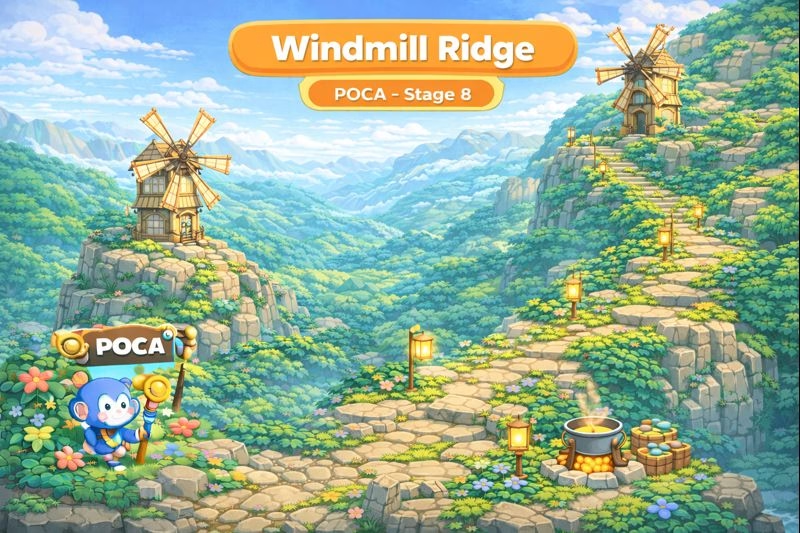
Windmill Ridge punishes impatience and rewards smart resets. The tribe doesn’t care if you brute force it — it cares if you can walk away before you torch your credits.
Puzzle pieces in this stage: 13 pieces
Stage completion reward (one-time): +170 credits
Stage 9 — Torchlit Path
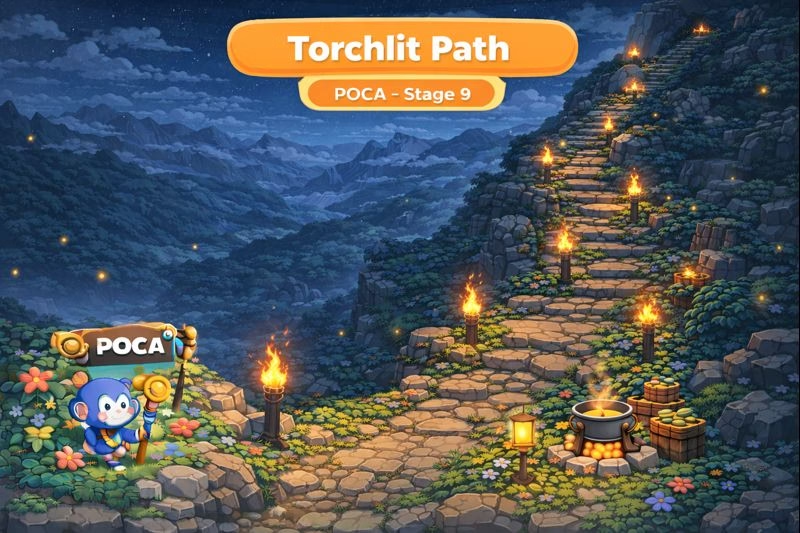
Torchlit Path is your final prep village before the last push. This is where players practice Stage 10 discipline — controlled attempts, stable balance, and no desperation runs.
Puzzle pieces in this stage: 14 pieces
Stage completion reward (one-time): +180 credits
Stage 10 — POCA Heartland

POCA Heartland is the final proof stage. You don’t “grind” this village — you reach it when your credits and focus are good. Clearing this finishes POCA conquest and unlocks the daily tribute.
Puzzle pieces in this stage: 15 pieces
Stage completion reward (one-time): +200 credits
POCA stages and card costs (how pricing scales)
In POCA, your card cost increases by 5 credits per stage. That means Stage 1 = 5 credits, Stage 2 = 10 credits, Stage 3 = 15 credits …and so on until Stage 10.
Instead of treating this as “just a price list,” use it as a decision tool: lower stages are for stability and rebuilding, higher stages are for progress and proof.
POCA Card Cost Table (with full details)
| Stage | Card Cost | What this stage is for | Best way to play it | “Move on when…” |
|---|---|---|---|---|
| 1 | 5 credits | Your warm-up stage. Learn the flow without pressure. | Play slow and clean. Don’t chase “perfect.” | You can clear without wasting attempts. |
| 2 | 10 credits | Builds consistency. Teaches you to stop panic-clicking. | Repeat a few clears until it feels normal. | You clear it consistently without needing luck. |
| 3 | 15 credits | Teaches pattern recognition and calm decision-making. | Read the board first, act second. | You stop making “rushed” mistakes here. |
| 4 | 20 credits | First stage where mistakes start feeling expensive. | Do shorter sessions. Stop when you feel tilted. | You can clear without needing multiple retries. |
| 5 | 25 credits | The “balance test.” Your routine starts here. | If you’re low on credits, farm lower first. | You can clear it even on an average day. |
| 6 | 30 credits | Teaches efficiency: fewer wasted moves, more discipline. | Pick a reliable approach and stick to it. | Your clears look repeatable, not random. |
| 7 | 35 credits | Stamina stage. Teaches patience and consistency over time. | Don’t grind nonstop. Clear in bursts. | You can clear without draining your balance. |
| 8 | 40 credits | Punishes impatience. Rewards smart resets. | If it’s not going well, stop early and return later. | You clear without desperation attempts. |
| 9 | 45 credits | Final prep stage before full conquest push. | Treat it like practice for Stage 10 discipline. | You can clear without a big credit drop. |
| 10 | 50 credits | Final proof stage. POCA completion push happens here. | Push only when your credits and focus are good. | You clear it consistently enough to finish POCA conquest. |
Why this table matters
This is the core POCA habit that saves credits:
Lower stage = stability + rebuild
Higher stage = progress + proof
If you’re low on credits, it’s smarter to play a stage you can clear cleanly than to keep paying higher costs while failing. POCA rewards players who play like they’re building a routine — not gambling.
What you unlock after fully conquering POCA
After POCA is fully conquered, you unlock:
✅ Daily Tribute: 50 credits per day
This is the first tribe that gives you a consistent daily reward for completion and continued progress. It’s designed to keep you stable so you can keep moving forward without constantly hitting zero.
The POCA daily routine (a clean way to play)
Here’s a simple routine that keeps you moving without burning your credits:
Step 1 — Collect your tribute first (when available)
If you have POCA fully conquered, grab the 50 credits/day early. Starting your session with your baseline makes everything smoother.
Step 2 — Clear your reliable stage first
Start with a stage you can clear consistently. This protects your balance and sets the tone for the session.
Step 3 — Push higher stages in short bursts
Don’t grind Stage 8–10 until you crash. Push in short attempts, then step back if it’s not working.
Step 4 — End with credits left
This is the “POCA difference.” Ending with credits left means you don’t log in tomorrow already desperate.
When to leave POCA
You should move to the next tribe when:
- you have a reliable stage you can clear consistently
- you understand how to stop yourself from overspending
- you can push higher stages without draining your balance
- you’ve fully conquered POCA and unlocked the 50/day daily tribute
If POCA still feels chaotic, the next tribes will feel expensive fast.
Quick POCA FAQ
“Should I farm lower stages?”
Yes — if you’re low on credits, farming a reliable stage is smarter than forcing higher ones. POCA is built to reward controlled play.
“Is POCA meant to be easy?”
It’s meant to be fair. It’s still a tribe. The challenge is learning consistency without burning credits.
“What’s the point of POCA if it’s the lowest tribe?”
It creates your first real credits routine and unlocks a daily baseline (50/day) that keeps you stable while you climb.
POCA → KIVA Bridge
When you finish POCA Heartland, POCA doesn’t hype you up — he just gives that quiet “approved” look. The lesson wasn’t about rushing to Stage 10. It was about control: knowing when to push and when to stop.
Then POCA points you forward.
Not to another starter tribe… but to a chief who runs a bigger responsibility.
A leader tied to villages. Expectations. And a different daily rhythm.
Next up: KIVA.